
Nepal at a glance
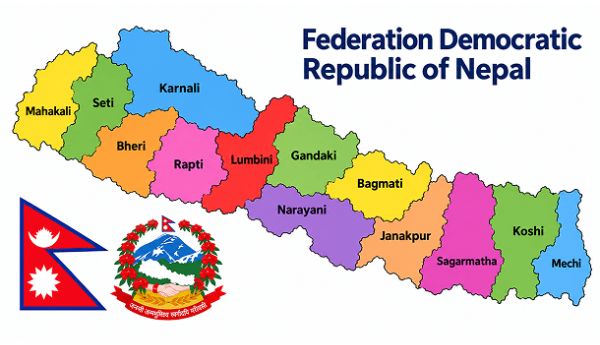
Nepal, Officially the Federal Democratic Republic of Nepal, is a landlocked sovereign state located in South Asia. Nepal is situated within latitude 26° 22’N to 30° 27′ N and longitude 80° 4′ E 88° 12’E. With an area of 147,181 square kilometers (56,827 sq mi). It’s shape is roughly rectangular about 885km long East to West and about 200km wide North to South and occupies 0.3 and 0.03% of land area of Asia and the world respectively. Population of Nepal is approximately 27 million (and nearly 2 million absentee workers living abroad), Nepal is the world’s 93rd largest country by land mass and the 41st most populous country. It is located in the Himalayas and bordered to the north by the People’s Republic of China, and to the south, east and west by the Republic of India. Specifically, the Indian states of Uttarakhand, Uttar Pradesh, Bihar, West Bangal and Sikkim border Nepal, while across the Himalayas lies the Tibetan Autonomous Region. Nepal is separated from Bangladesh by the narrow Indian Siliguri Corridor. Kathmandu is the nation’s capital and largest metropolis.
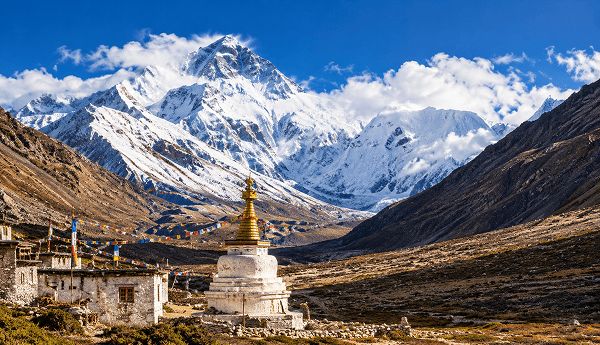
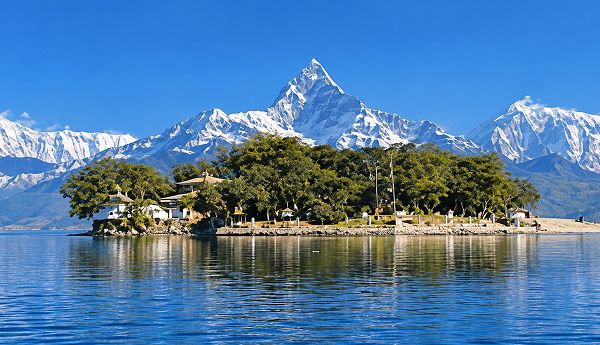
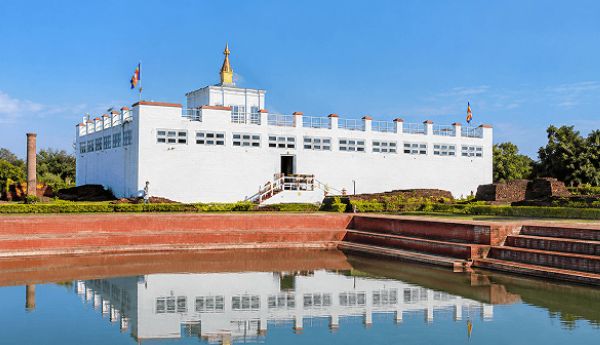
The mountainous north of Nepal has eight of the world’s ten tallest mountains, including the highest point on Earth, Mount Everest, called Sagarmatha in Nepali. It contains more than 240 peaks over 20,000 ft (6,096 m) above sea level. The Southern Terai region is fertile and humid. Lumbini, the birthplace of Lord Gautam Buddha, is located in this region. Lumbini is one of the holiest places of one of the world’s great religions and its remains contain important evidence about the nature of Buddhist pilgrimage centres from as early as 3rd century BC.
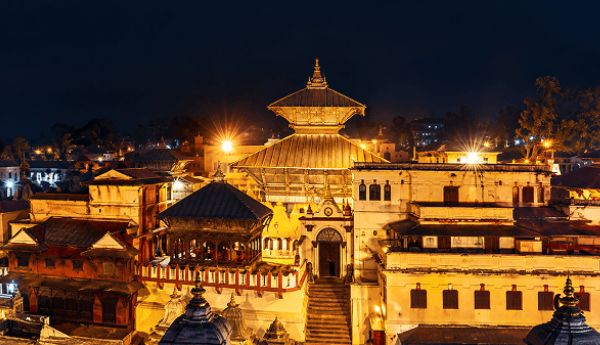
Hindusim is Practiced by about 81.3% of Nepalis, making it the country with the highest percentage of Hindus. Buddhism is linked historically with Nepal and practiced by 16%, Kirat 5.1%, Islam by 4.4%, Christianity 1.4% and animism 0.4% . A large section of the population, especially in hill region, even though they follow Hindu customs, may identify themselves as both Hindu as well as Buddhists which can be attributed to syncretic nature of Hinduism and Buddhism in Nepal. In 2013, Nepal ranked the 157th place on the Human Development Index (HDI) and is one of the least developed nations in the entire world.
| Location | Southern Asia, between China and India |
|---|---|
| Area | Total 147,181 sq km (Land 143,181 · Water 4,000) — slightly larger than Arkansas |
| Boundaries | Total 2,929 km — China 1,236 km, India 1,690 km · 0 km coastline (landlocked) |
| Climate / Terrain | Cool summers & severe winters (north) to subtropical (south); Terai plains, central hills, rugged Himalayas |
| Elevation | Lowest Kechana Kalan 70 m · Highest Mount Everest 8,850 m |
| Resources / Land use | Quartz, water, timber, hydropower, scenic beauty; arable 21.68%· irrigated 11,350 sq km |
| Geography note | Strategic location between China and India; contains eight of the world's 10 highest peaks |
Build Your Global Workforce Today
Partner with Apollo Manpower to source reliable, skilled, and dedicated Nepalese professionals tailored to your business needs.